California’s Fight
Californians have been fighting for their voice in politics for over a century.
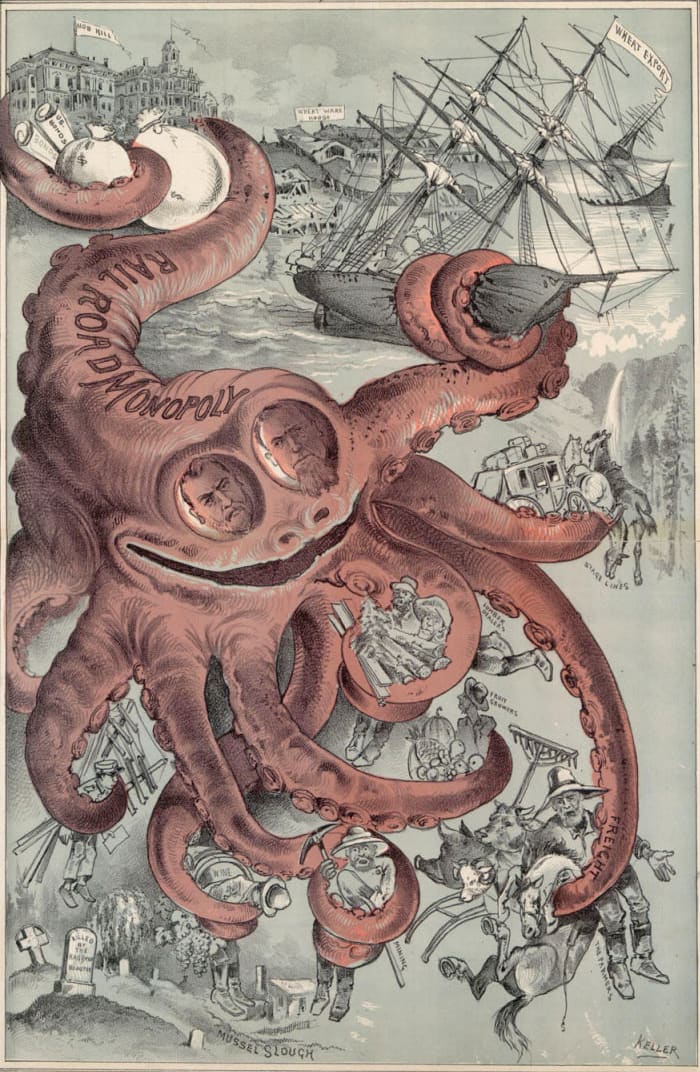
The railroad
In 1882, the San Francisco magazine The Wasp drew the railroad monopoly as a giant octopus strangling California’s farmers, miners, shippers and fruit growers.
In 1911, California voters adopted the initiative, giving themselves the power to write their own laws.
Today, corporations and other artificial entities have co-opted the tool Californians built to stop special interests, spending more than $200 million on a single measure. Meanwhile, elected officials can trade stocks in the companies they regulate, and former legislators can be paid to lobby their old colleagues after just one year.
Timeline of California’s fight
- 1911
Voters adopt the initiative, referendum and recall
On October 10, California voters adopted all three in response to the Southern Pacific Railroad’s grip on state government.
Source: CalMatters; KQED; Ballotpedia
- 1974
California adopts the Political Reform Act
The act set rules for campaign finance, conflicts of interest and lobbying.
Source: Fair Political Practices Commission v. Superior Court (1979)
- 2010
Citizens United
On January 21, the U.S. Supreme Court decided Citizens United v. FEC, 5 to 4.
Source: Supreme Court record
- 2010
Voters reject PG&E’s Prop 16
PG&E spent about $46 million. Opponents spent about $100,000. Prop 16 failed 52.75% to 47.25%.
Source: Ballotpedia; ABC7
- 2012
Out-of-state nonprofits hide $11 million
About three weeks before the election, $11 million reached a California committee through a chain of out-of-state nonprofits. Voters did not learn who paid until the day before the election.
Source: California Attorney General; KPBS; Capitol Weekly
- 2014
Chevron loses in Richmond
Chevron put $3.1 million into Richmond’s city election. Every candidate it backed lost.
Source: Richmond Confidential
- 2020
Gig companies pass Prop 22
Uber, Lyft, DoorDash and others spent more than $200 million to exempt their drivers from a state labor law. The Legislature can now amend it only with a seven-eighths vote.
Source: CalMatters
- 2024
Five measures are negotiated off the ballot
Five proposed measures were removed from California’s ballot in last-minute deals.
Source: CalMatters via Santa Barbara Independent
- 2026
Ballot spending hits a record
Committees for and against California’s 14 ballot measures reported $798.9 million in contributions as of October 22 filings.
Source: Ballotpedia
Other states are taking up this fight
Hawaii’s governor signed a law limiting corporate election spending in May 2026, and it has been challenged in court. On November 3, 2026, Montana voters approved a similar measure, Initiative 194, with about 65% of the vote. It is set to take effect January 1 and faces likely court challenges.
Sources: CNBC, Nov. 6, 2026; Ballotpedia, May 19, 2026
Former U.S. Transportation Secretary Pete Buttigieg says corporate and dark money now drive decisions on health care, technology and taxes, and that Citizens United made it much worse. He argues the Montana Plan can change that within the Constitution and the legal system we already have, by ending corporate election spending. He calls it a nonpartisan effort, compares it to Montana’s fight against its copper kings, and says it could be a blueprint for the country. Recorded before the vote.
Montana PBS explains how the plan works: the state would keep granting corporations, unions and nonprofits all their current powers except the power to spend for or against candidates and ballot measures. Its author says that would end dark money, while donations from individuals could continue. A Republican attorney argues it is an unconstitutional ban on political speech, and the state Chamber of Commerce says businesses would lose their voice on local school levies and hospital bonds. Supporters answer that businesses could still endorse and speak, just not pay for election spending. A law professor notes the Supreme Court sometimes overturns its own decisions after they are challenged. Recorded before the vote. The last part covers two other Montana ballot measures.
Join the coalition
Add your name in support of the anti-corruption platform.